Will Russia and America Go to War? Here's What's Really Going On
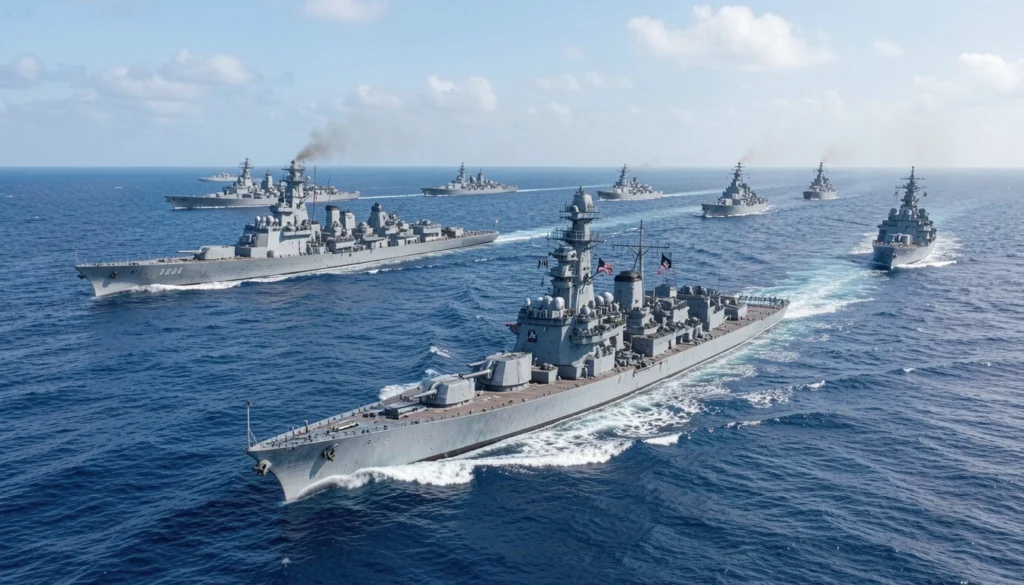
Every few months, the headlines get scary again. Russia says something provocative. America responds. And millions of people type the same question into their phones: Will Russia and America go to war?
It’s a question worth taking seriously — not with panic, but with clear eyes. lets evaluate that
Chance To Direct War Is Unlikely But The Risk Is Higher Than Before
Neither side wants a direct military confrontation. Both Russia and America know that a war between two nuclear superpowers could quickly spiral into something catastrophic. And yet, the conditions that have historically kept that risk in check are quietly eroding.
That should concern all of us
The Ukraine Factor: Where Things Could Go Wrong
The most obvious flashpoint is Ukraine. Russia invaded in February 2022, and the war is now grinding into its fourth year. The United States has been supplying weapons, intelligence, and financial support to Ukraine — but has stopped short of sending troops.
That line matters. As long as American soldiers aren’t fighting Russian soldiers directly, both sides have maintained a kind of unofficial boundary. But that boundary gets tested constantly. Any miscalculation — a stray missile, a downed aircraft, a misread radar signal — could change the equation fast.
The Nuclear Arms Control Problem Nobody's Talking About
Here’s something that deserves far more attention than it’s getting.
The New START treaty — the last remaining nuclear arms agreement between the U.S. and Russia — expired on February 5, 2026, leaving both countries without any cap on the number of deployed nuclear weapons each is allowed to have.
Think about what that means. For the first time in 54 years, the world’s two major nuclear powers are not legally bound by any arms-control treaties and are free to expand their nuclear arsenals as they see fit.
And they can do it quickly. With existing stockpiles, the United States and Russia could each deploy hundreds of additional warheads within a matter of weeks.
Without New START’s limits, strategic planning on both sides is more likely to be driven by uncertainty and worst-case assumptions — increasing the risk of a new arms race and making crises harder to manage.
This isn’t abstract. More weapons, less transparency, and rising tensions is a dangerous combination.
What Would Actually Happen If They Did Go to War?
This is the part people don’t want to think about — but probably should.
A simulation by Princeton University researchers found that 34.1 million people could die and another 57.4 million could be injured within the first few hours of a nuclear exchange triggered by even a single low-yield nuclear weapon. And that’s before accounting for the longer-term effects: radioactive fallout, destroyed food systems, and the kind of global cooling that affects harvests for years.
There is no version of a US-Russia nuclear war that ends well for anyone — not for Americans, not for Russians, not for the rest of the world watching from the sidelines.
So Why Are People So Worried Right Now?
A few things are happening simultaneously that are making analysts nervous:
- No guardrails on nuclear weapons. As covered above, the New START treaty is gone. This marks a significant break in more than five decades of bilateral nuclear arms control — and signals a move away from the kind of mutual restraint that has kept the peace.
- The Ukraine war hasn’t ended. Peace talks have been slow and complicated. The longer the war drags on, the more opportunities there are for a dangerous miscalculation.
- NATO’s Article 5 is always in the background. If Russia were ever to attack a NATO member — even accidentally — the alliance’s mutual defense clause would obligate the U.S. to respond militarily. That’s a tripwire that runs through Europe.
- A broader axis of tension. Analysts describe a “structural contest” between the United States and a loose alliance of Russia, China, and Iran — fought through proxies, economic pressure, and strategic competition — that is already well underway.
The Honest Assessment
A direct, conventional war between Russia and America remains unlikely in 2026. Both governments understand the stakes. Neither side has shown a desire to cross that line intentionally.
But “unlikely” is not the same as “impossible.” And the safety nets that used to make war between these two powers almost unthinkable — arms treaties, diplomatic channels, established norms — are weaker now than they’ve been in a generation.
The real danger isn’t that either side decides to go to war. It’s that a crisis escalates faster than anyone can manage, and choices get made under pressure that wouldn’t be made in calmer moments.
That’s why this question — will Russia and America go to war? — deserves a real answer, not just reassurance.
What You Can Do
Stay informed. Support diplomacy. And push back against the idea that conflict between major powers is somehow inevitable. History is full of moments where cooler heads and careful negotiation prevented catastrophe.
This doesn’t have to be one of the moments where they didn’t.