
Why Did Nikola Tesla Die Poor? The Heartbreaking Truth Behind a Genius's Financial Ruin
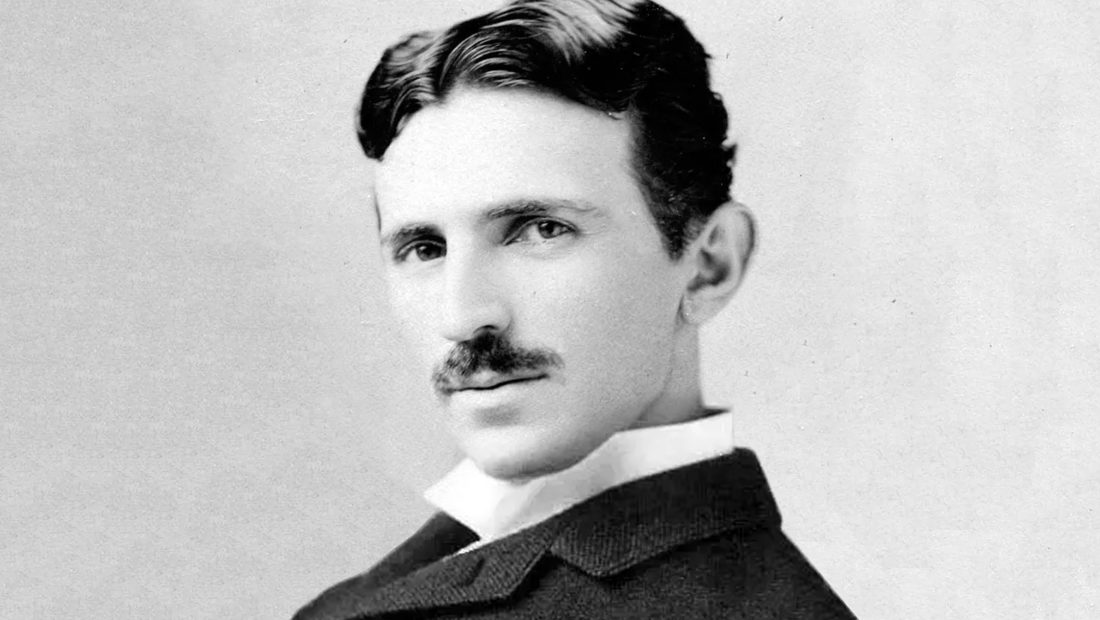
By all accounts, Nikola Tesla should have become the world’s first billionaire. He held over 300 patents. He rewired the way electricity travels across continents. His ideas — many of them — became the invisible backbone of modern civilization. And yet, on January 7, 1943, Nikola Tesla died on the 33rd floor of the Hotel New Yorker in Manhattan. He was 86, alone, and had been living in small hotel rooms like this for decades. His cause of death was coronary thrombosis.
So what happened? How does the man who gave the world alternating current — the very system that powers your home right now — die without a dollar to his name?
The answer isn’t simple, and it isn’t just about money. It’s about a man who was wired differently from everyone around him, who cared deeply about the wrong things by the world’s financial standards, and who paid the ultimate price for it.
He Was a Genius Who Had No Interest in Being Rich
Let’s start at the beginning of the end.
In the PBS documentary Tesla: Master of Lightning, Tesla’s grand-nephew William Terbo explained his downfall plainly: “He was totally disinterested in business. He did not make the relationship between the importance of business and the importance of his invention and discovery.”
This wasn’t a flaw that crept up on him. It was baked into his character from the start. Tesla came to America in 1884 with almost nothing. As he passed through Ellis Island, his entire worldly possessions consisted of a book of poetry, a letter of recommendation, and exactly four cents in American currency. That letter was addressed to Thomas Edison.
The two men worked together briefly, but their relationship curdled fast. Edison reportedly told Tesla, “If you solve this problem, I’ll give you $50,000.” Tesla worked on it for months and solved the major issue no one else could. When he asked Edison for his money, Edison replied, “What money? It’s a shame you don’t understand American humor.”
Tesla quit. He couldn’t stomach the deception. And that reaction — walking away from exploitation on principle rather than fighting for what he was owed — would define his financial life again and again.
The Royalties He Gave Away for Free
Here is the moment that, more than any other, sealed Tesla’s financial fate.
When Westinghouse paid Tesla for his AC motor and generator patents, the deal included royalty payments that, as AC power was slowly adopted across the country, amounted to hundreds of thousands of dollars a year. By 1890, just one year before his 35th birthday, Tesla had become a full-fledged millionaire — $1 million in 1890 being worth over $25 million today.
He was set. He could have stopped, lived comfortably, and gone down in history as a wealthy pioneer. But then came 1907.
George Westinghouse’s electric and manufacturing company was facing a severe financial crisis. To survive, the company needed cash — cash it didn’t have. Tesla held royalties that, combined with Westinghouse’s mounting debt, would result in catastrophic losses. Westinghouse approached Tesla and asked him to void the contract — to walk away from what would be equivalent to around $300 million today.
And Tesla said yes.
He tore up the contract. Not because he was naive. Not because he was tricked. He did it because he believed in the mission more than the money. He had a vision of a world powered by alternating current, and he wasn’t going to let accounting destroy it. It was one of the most selfless — and financially devastating — decisions in the history of invention.
The Dream That Broke Him: Wardenclyffe Tower
If giving away his royalties was the wound, the Wardenclyffe Tower was where Tesla bled out.
Driven by a desire to provide free electricity to the world, Tesla poured vast sums into his ambitious Wardenclyffe Tower project — an experimental wireless transmission system intended to transmit both information and power globally. The project ultimately failed due to the technological limitations of the time and a lack of funding. It drained his resources and tarnished his reputation among investors.
Tesla had secured financing from J.P. Morgan to build the giant transmission tower. “Once completed,” Tesla said at the time, “it will be possible for a businessman in New York to dictate instructions and have them immediately appear in type at his office in London or elsewhere.” But when construction began, it became apparent that Tesla would run out of money before it was finished.
Tesla had secured financing from J.P. Morgan to build the giant transmission tower. “Once completed,” Tesla said at the time, “it will be possible for a businessman in New York to dictate instructions and have them immediately appear in type at his office in London or elsewhere.” But when construction began, it became apparent that Tesla would run out of money before it was finished.
The War of Currents and What It Cost Him
Before Wardenclyffe, there was the War of Currents — the ferocious commercial and PR battle between Tesla’s AC system and Thomas Edison’s direct current (DC) system.
Edison was not happy to see his DC patents threatened. He launched a PR campaign spreading lies about the dangers of AC power, often involving public electrocutions of stray cats and dogs to convince the public that AC was lethal. It was a dirty fight, and it was expensive. Tesla spent enormous energy and resources winning the scientific argument — which he did — but the battle drained him in ways that went beyond dollars.
He won the war. His AC system became the global standard. But winning a war, it turns out, doesn’t always mean keeping the spoils.
A Man Who Didn't Understand Money — By Choice
Tesla’s death in relative poverty was the result of a combination of personality traits, business and legal failures, changing technology markets, and poor financial management — not a lack of technical achievement.
He was, by nature, constitutionally uninterested in protecting his own financial interests. Tesla was a brilliant inventor but struggled to protect his intellectual property effectively and negotiate favorable deals. He was more interested in pursuing new ideas than in managing his existing assets or maximizing his profits. He repeatedly made decisions that prioritized scientific advancement over personal gain.
Later in life, the mental and behavioral struggles that had always lurked beneath the surface became more pronounced. By 1912, Tesla had become increasingly compulsive — counting his steps, insisting on having 18 napkins on the table, becoming obsessed with cleanliness and the numbers 3, 6, and 9. The eccentricities that had once seemed charming in a successful inventor now made him seem unstable to the investors and institutions he needed.
He had also lost the race to invent the radio to Guglielmo Marconi in 1901, and his financial support from investors like J.P. Morgan had dried up. As the world withdrew from Tesla, Tesla withdrew from the world.
In his final years, he found his closest companionship not in people but in pigeons — feeding them on the streets of New York, nursing injured ones back to health in his hotel room. One white pigeon died in one of his dreams in 1922, and Tesla told friends that he believed his life’s work was finished.He kept going for another two decades anyway, still working, still dreaming, still feeding his birds.
The Last Hotel Room
In his final days, Tesla’s room was paid for by the Westinghouse company the same company whose survival he had once sacrificed his fortune to protect. There is something both poetic and painful about that detail. Even at the very end, the industry he had built was grudgingly keeping its creator alive.
He died with no significant assets, no family around him, no fanfare. After his death, U.S. government agents swept into the hotel and gathered his notes and files. Many believed they were looking for evidence of Tesla’s “death ray” — a device he had been hinting at for years — as well as any other inventions they could find.
The papers were taken. Much of what he had been working on in those final solitary years remains unknown.
What We Can Learn From Tesla's Financial Tragedy
The question “why did Nikola Tesla die poor?” doesn’t have a single villain. There’s no one moment where everything went wrong. It was a lifetime of choosing ideas over income, vision over viability, and principle over profit.
Tesla was a genius who deeply understood nature. But he did not understand people and the human invention of money well enough. He lived in a world where brilliance alone was never going to pay the hotel bill.
And yet — here’s the thing — Tesla knew exactly what he was doing. He wasn’t unaware of money. He had been a millionaire. He understood contracts. He just didn’t care enough about wealth to protect it when something more important was at stake.
Today, Tesla is celebrated as a visionary genius and one of the most important inventors in history. His AC electrical system remains the foundation of modern power grids, and his other inventions and ideas continue to inspire scientists and engineers worldwide.
The world runs on his ideas. It just forgot to pay him for them while he was alive.