Hidden Lakshadweep Culture
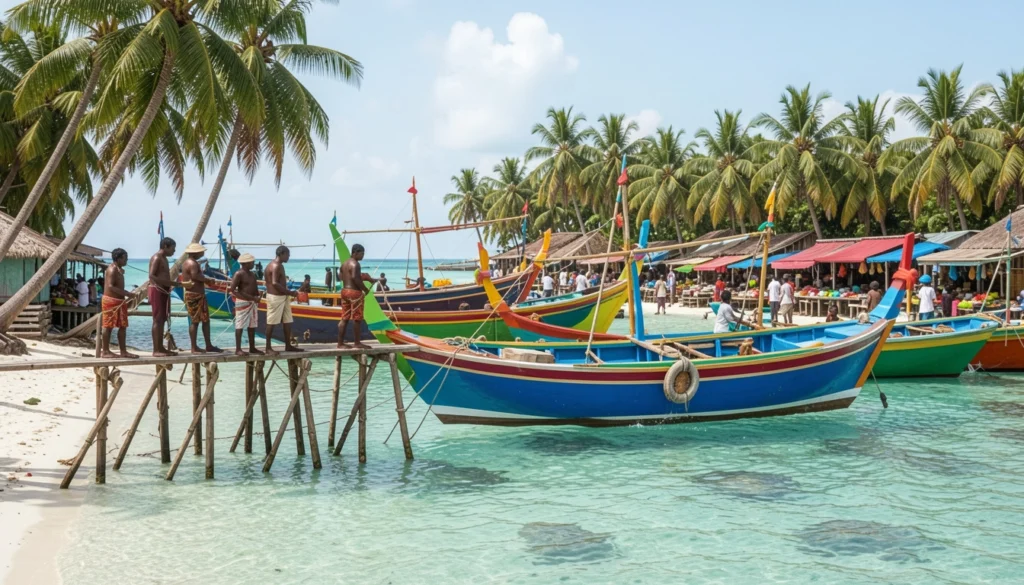
Lakshadweep’s culture is a quiet, deeply human story of island life, shaped by the sea, shared faith, and a gentle mix of old‑world Malabar and Malay traditions. It feels less like a “tourist destination” and more like a close‑knit community where everyday life itself is the ritual.
How people live
Most islanders are Muslim, but their Islam is softened by local habits: it mixes prayer and fishing nets, family feasts and coral‑reef knowledge. Villages are tight‑clustered, with narrow lanes, coconut trees, and shared courtyards where elders tell stories and children run between neighbours’ houses.
Family and matriliny
A striking feature is the matrilineal system, especially in many islands, where lineage and property are traced through women. In practice, this means homes and farmland often pass down the female line, and women are central to both family decisions and cultural continuity.
Faith, food, and festivals
Religious life is visible but warm and unhurried—Eid‑ul‑Fitr, Bakrid, and Muharram are marked by prayer, community meals, and simple but joyful gatherings. Onam, borrowed from Kerala, is also celebrated in many islands, blending Hindu tradition with local Muslim customs in a shared spirit of festivity.
Food is honest and coastal: fish, coconut, and rice form the backbone of almost every meal, with dishes like octopus fry, fish curries, and coconut‑based snacks defining the flavour of the islands. Meals are often shared around low tables or on the floor, with everyone eating together as a way of reinforcing kinship.
Language, dress, and crafts
Malayalam is the main language, with Mahl spoken on Minicoy, making the islands a small linguistic mosaic. Men usually wear a simple mundu or lungi, women often a sari or salwar kameez, all modest and practical for heat and island work.
Traditional houses are built with coral stone, palm leaves, and timber, designed to breathe in the tropical climate and withstand sea winds. Fishing, coconut farming, and coral‑based crafts are not just jobs but inherited skills passed from grandparents to grandchildren, turning everyday labour into quiet acts of cultural preservation.
Tribe roots and everyday rhythm
The island society has roots in several tribal‑like communities—Aminidivi, Koyas, Melacheris, Malmis, and others—each once playing distinct roles in land, labour, and trade. Today, these distinctions blur into daily life: neighbours from different backgrounds fish together, share harvests, and celebrate festivals side‑by‑side, making diversity feel ordinary rather than showcased.