Best Time to Visit Switzerland
There’s no wrong time to visit Switzerland — but there’s almost certainly a perfect time, just for you.
Let me be upfront with you: Switzerland is one of those places that doesn’t really have a “bad” season. Whether it’s draped in winter white, bursting with spring wildflowers, glowing golden in autumn, or buzzing with summer hikers — this country has a way of making you feel like you picked the right time to come. But the best time to visit Switzerland very much depends on what you’re looking for and what you’re hoping to bring home with you, whether that’s photos of snowy alps, fondue memories, or a serious sunburn from a lakeside afternoon.
Let’s walk through the year, honestly and practically, so you can decide for yourself.
Summer | the classic choice (June – August)
If you’re visiting Switzerland for the first time, summer is the most rewarding season to do it. The weather is warm, the mountain trails are accessible, and everything is open. You can hike around Grindelwald, cycle along Lake Geneva, take a boat ride on Lake Lucerne, and still make it to a rooftop bar in Zurich by evening. The days are long, the air is crisp at altitude, and the scenery is almost aggressively gorgeous.
That said, July and August are genuinely crowded. The Matterhorn viewpoints, Interlaken, and the Jungfraujoch will all have queues. Prices for accommodation spike, particularly in tourist-heavy towns. If you’re visiting in this window, book at least two to three months in advance — especially if you’re eyeing any mountain railway or cable car excursions.
“June is the sweet spot — the trails are open, the crowds haven’t quite arrived, and the alpine meadows are at their most electric green.”
Winter | snow, skiing and cosy villages (December – February)
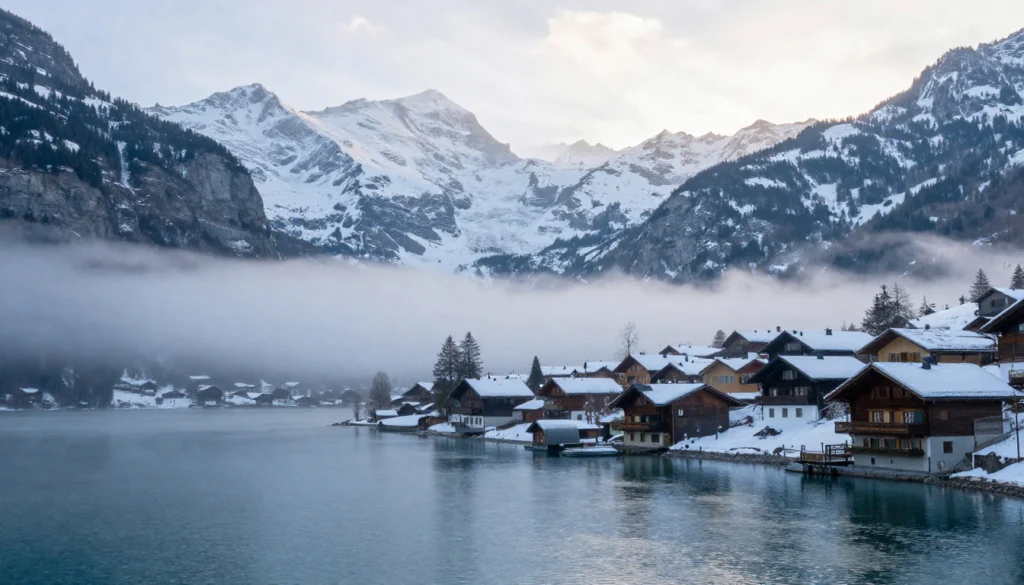
Switzerland in winter is exactly what the postcards promise: snow-covered chalets, steaming mugs of glühwein, and some of the best ski slopes in the world. If skiing is your primary reason for visiting, late January through February tends to offer the best snow conditions while avoiding the Christmas and New Year crowds.
Non-skiers, don’t write off winter either. Swiss cities like Bern, Basel, and Zurich are wonderfully atmospheric in December with their Christmas markets. Even a simple walk through the old town of Lucerne after snowfall is worth the flight. Just pack warmly, and know that temperatures in mountain areas can dip well below freezing.
Autumn | the underrated season (September – November)
Ask any seasoned Switzerland traveller and they’ll tell you — September is arguably the best month in the whole calendar. The summer hordes have gone home, the weather is still pleasant enough for hiking, and the light has that golden, late-afternoon quality that photographers chase their whole lives. The vineyards around Lake Geneva and the canton of Valais are in full harvest mode, and wine festivals pop up across the country.
October brings fiery colour to the forests and a noticeable dip in prices. By November, things quiet down significantly and some mountain facilities start to close for the pre-ski shoulder period. If you want tranquillity without roughing it, early autumn is your window.
Spring | fresh, quiet, and underappreciated (March – May)
Spring in Switzerland sneaks up on you. March can still be very wintry at altitude, but by April the lower valleys begin to bloom and the whole country seems to exhale. This is one of the quieter periods, which means better deals, fewer queues, and a more local feel to your experience.
May is particularly lovely — the rhododendrons are in bloom in the alpine meadows, the lakes are coming alive again, and you can usually start lower-altitude hikes without needing snowshoes. If budget matters to you, May is perhaps the best value month in all of Switzerland.
Quick tips before you book
Book mountain railways and popular cable cars weeks in advance during summer — they sell out, especially the Jungfraujoch.
A Swiss Travel Pass often works out cheaper than buying individual tickets, especially if you plan to move between cities.
Weather in the Alps changes rapidly. Even in July, always carry a light waterproof layer when hiking.
The “shoulder” weeks — late June, early September — offer peak-season experiences at near off-season prices.
Switzerland is expensive year-round. Self-catering accommodation and supermarket lunches (Migros and Coop are excellent) can save you significantly.
At the end of it all, the best time to visit Switzerland is the one that matches your pace, your interests, and your budget. Come in winter for the ski slopes and festive charm. Come in summer for hiking and lake days. Come in autumn for calm beauty and incredible value. Come in spring for fresh air and far fewer selfie sticks in your photos.
Whatever time you choose, Switzerland will make it feel like you timed it perfectly.