
Sunfish Explained | From the Giant Ocean Mola to the Bluegill in Your Local Pond
Say the word “sunfish” to ten different people and you’ll probably get ten different mental images. An angler might picture a scrappy little bluegill fighting on the end of a line. A snorkeler might think of a car-sized creature drifting near the surface of the open ocean. Both are right, and that’s exactly what makes sunfish such an interesting topic to dig into.
The name covers two completely unrelated groups of fish that just happen to share a common English word. One lives in your neighborhood pond and fits in a frying pan. The other is the heaviest bony fish on the planet and can weigh more than a small car. Understanding the difference — and knowing the specific facts people actually search for, from diet to size to whether these fish can feel pain — makes you a lot more informed the next time the topic comes up, whether you’re planning a fishing trip or just satisfying your curiosity.
What Exactly Is a Sunfish?
“Sunfish” isn’t a single species. It’s a common name that got attached to two very different fish for two very different reasons, and mixing them up is one of the most common points of confusion online.
The Giant Ocean Sunfish (Mola Mola)
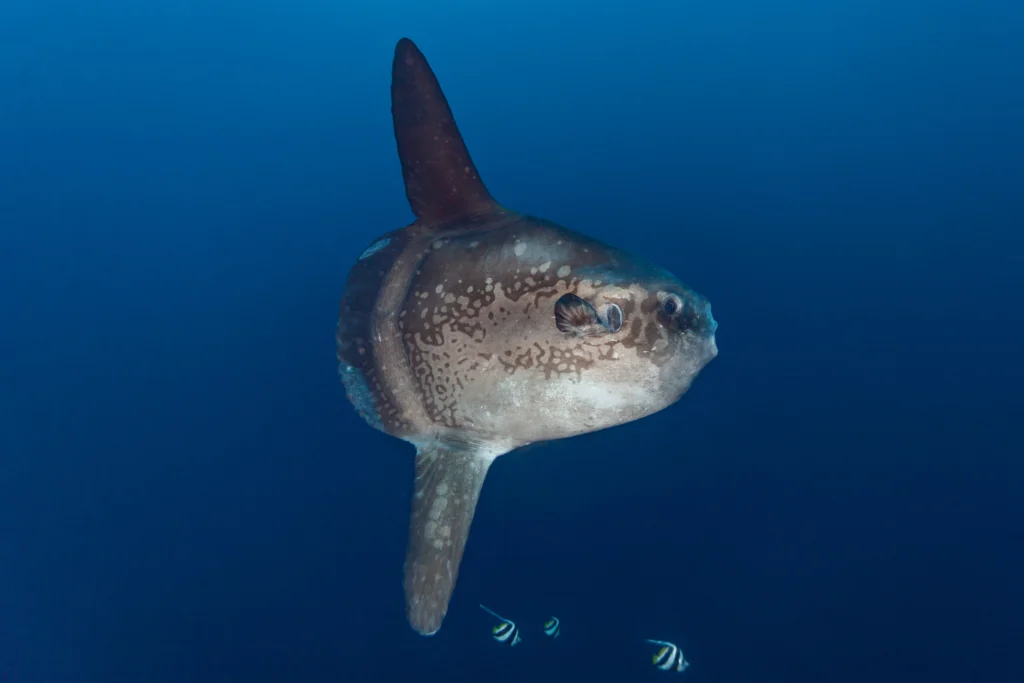
The giant ocean sunfish, known scientifically as Mola mola, is a massive, saucer-shaped fish that lives in oceans around the world. Its Latin name comes from the word for “millstone,” a nod to its round, flattened body. Divers sometimes mistake its huge dorsal fin for a shark’s when it pokes above the surface.
What makes the mola mola sunfish so recognizable is its odd shape. It looks almost like a fish head with fins attached, since its tail never fully develops. Instead, that back end folds into a stubby, rounded structure called a clavus, which the fish uses more like a rudder than a propeller.
Freshwater Sunfish (The Bluegill Family)
The freshwater version belongs to the family Centrarchidae, which includes roughly three dozen native North American species — bluegill, pumpkinseed, redear, longear, and rock bass among them. These are the classic “panfish” that generations of anglers have pulled from ponds and lakes.
Bluegill (Lepomis macrochirus) is the most widespread and commonly caught member of this group, which is why people often use “bluegill” and “sunfish” interchangeably, even though bluegill is technically just one species within the broader sunfish family.
How Big Are Sunfish?
This question really depends on which sunfish you’re asking about, since the size gap between the two groups is enormous.
Feature | Giant Ocean Sunfish (Mola mola) | Freshwater Sunfish (Bluegill family) |
Typical weight | 550–2,200 lbs | Under 1 lb |
Maximum recorded weight | Roughly 5,000 lbs | 2–4 lbs (larger species) |
Typical length | 6–8 feet fin-to-fin | 6–8 inches |
Habitat | Open ocean, worldwide | Ponds, lakes, slow rivers |
The ocean sunfish is the heaviest bony fish known to science. A specimen that washed ashore in New Zealand in 2006 measured nearly 11 feet long and tipped the scales at around 5,000 pounds. Even an “average” adult can weigh as much as a small car. Freshwater sunfish, by contrast, rarely top a pound, with redear sunfish among the larger species in the family, occasionally exceeding two pounds.
What Does a Sunfish Eat?
Diet is another area where the two types diverge sharply, though both share a surprising trait: neither is a picky eater once you understand what’s actually on the menu.
Giant ocean sunfish diet:
- Jellyfish and salps (their primary food source)
- Small fish and squid
- Crustaceans and zooplankton
- Occasionally sea sponges or brittle stars
Jellyfish are low in calories, so mola mola have to eat enormous quantities just to maintain their bulk. A protective mucus lining in their digestive tract keeps stinging cells from causing harm as the jellyfish break down. Younger, smaller mola actually eat a broader diet that includes bottom-dwelling prey, shifting toward a jelly-heavy diet as they mature.
Freshwater sunfish diet:
- Aquatic insects and larvae
- Small crustaceans and worms
- Occasionally small fish or fish eggs
Bluegill and their relatives are opportunistic feeders, which is part of why they’re so easy to catch — they’ll investigate almost anything small that moves near their hiding spots along vegetation and submerged structure.
Can You Eat Bluegill Sunfish?
Yes, and it’s one of the better-tasting freshwater fish you can catch. Bluegill has firm, mild, flaky white meat with almost none of the “fishy” taste that turns some people off other species. It’s not poisonous, and while the dorsal fin has spines that can give you a light prick while handling the fish, there’s nothing dangerous about eating it.
A few tips if you plan to cook your catch:
- Scale and fillet promptly. Bluegill meat holds up best when cleaned soon after catching.
- Keep it simple. A basic cornmeal or flour dredge and a hot pan produces classic, crispy results.
- Watch portion size. Because bluegill run small, plan on several fish per serving.
- Check local limits. Many states set daily bag limits for panfish, so confirm current regulations before keeping a cooler full.
Note that this applies to freshwater sunfish. The giant ocean sunfish is not a food fish in the United States — it’s protected in many regions, and its size, habitat, and biology make it an entirely different category of animal from the bluegill on your dinner plate.
Do Sunfish Feel Pain?
This question applies to fish generally, and it’s genuinely debated among scientists rather than settled. Both sides bring real evidence to the table.
Researchers have confirmed that fish, including sunfish species, have nociceptors — sensory receptors that detect potentially harmful stimuli like extreme temperature or physical damage. Studies dating back to the early 2000s showed that when these receptors are triggered, electrical activity travels toward brain regions associated with conscious processing, not just reflex centers. Organizations like the American Veterinary Medical Association have cited this evidence when developing humane handling guidelines.
Other researchers push back on that conclusion. Their argument centers on the fact that fish lack a neocortex, the brain structure mammals use for higher-level conscious experience. From this view, a fish’s reaction to an injury might be a sophisticated reflex rather than a felt sensation the way humans understand pain.
The honest answer is that scientists haven’t reached full consensus. What most agree on is that fish possess the physical hardware to detect harmful stimuli and change their behavior in response, even if the deeper question of subjective experience remains open.
Where to Catch Sunfish in Stardew Valley
If you landed here from a search about the farming game rather than the fish, here’s the practical answer. In Stardew Valley, the Sunfish is one of the easiest catches for new players, which makes it a great fish to target early in the game.
Sunfish requirements in Stardew Valley:
- Location: The river running through Pelican Town and Cindersap Forest (also available on Riverlands, Forest, and Hill-top farm layouts)
- Season: Spring or Summer only
- Weather: Sunny or windy days (it won’t appear in the rain)
- Time: 6 AM to 7 PM
- Difficulty: Low (rated 30 out of 100), making it beginner-friendly
If you’re short on time or need one outside its normal window, Magic Bait lets you catch a Sunfish regardless of season, weather, or time of day. It sells for a modest 30 gold at base quality but is required for the River Fish Bundle at the Community Center, so it’s worth grabbing a couple during your first spring.
Key Benefits of Learning About Sunfish
Understanding sunfish, both types, is more than trivia:
- Better fishing trips. Knowing bluegill habits and habitat helps you catch more fish with less frustration.
- Ocean literacy. The mola mola plays a role in controlling jellyfish populations, which matters for marine ecosystem balance.
- Smarter cooking. Recognizing which sunfish are edible (freshwater) versus protected or impractical (ocean) keeps you on the right side of regulations.
- Conservation awareness. The giant ocean sunfish is currently listed as vulnerable, and knowing why helps support informed conservation choices.
Common Mistakes People Make About Sunfish
- Assuming all sunfish are the same fish. Confusing bluegill with mola mola leads to bad information about size, diet, or edibility.
- Overestimating freshwater sunfish size. Even a “trophy” bluegill is nowhere near the multi-hundred-pound range people sometimes imagine after reading about ocean sunfish.
- Handling bluegill carelessly. Their spiny dorsal fin isn’t dangerous, but a careless grip can still result in a painful poke.
- Assuming ocean sunfish are aggressive. Despite their size, mola mola are slow, docile, and generally harmless to divers.
Best Practices for Fishing and Handling Sunfish
- Use light tackle for bluegill. A light or ultralight rod makes catching these smaller fish far more enjoyable and gives you a real sense of the fight.
- Fish near structure. Bluegill favor logs, weed beds, and dock pilings, so cast close to cover rather than open water.
- Handle fish quickly if catch-and-release. Minimizing time out of water improves survival odds for released sunfish.
- Respect ocean sunfish from a distance. If you’re diving and encounter a mola mola, observe without touching; they can be sensitive to disturbance despite their calm demeanor.
Expert Tips
Anglers who target panfish consistently recommend small hooks (size 6-10) and light line, since bluegill have relatively small mouths despite their name. Live bait like worms or crickets tends to outperform lures for beginners, though small jigs work well once you get a feel for the bite.
For anyone interested in the ocean sunfish beyond casual reading, marine research organizations occasionally post satellite tagging data online, which offers a genuinely fascinating look at how far and how deep these fish travel — some dive well below 600 meters chasing prey before returning to the surface to bask and rewarm.
Frequently Asked Questions
Is a sunfish the same as a bluegill?
Not exactly. Bluegill is one specific species within the broader sunfish family (Centrarchidae), so all bluegill are sunfish, but not all sunfish are bluegill.
How big can a giant ocean sunfish get?
Typical adults weigh between 550 and 2,200 pounds, with the largest confirmed specimens reaching close to 5,000 pounds and measuring nearly 11 feet long.
What does a sunfish eat in the wild?
Ocean sunfish primarily eat jellyfish and other gelatinous prey, while freshwater sunfish like bluegill eat insects, larvae, and small crustaceans.
Can you eat bluegill sunfish?
Yes. Bluegill has mild, firm, flaky meat and is considered one of the better-tasting freshwater panfish, provided you follow local fishing regulations.
Where can you catch sunfish in Stardew Valley?
In the river running through Pelican Town and Cindersap Forest, during Spring or Summer, on sunny or windy days between 6 AM and 7 PM.
Are ocean sunfish dangerous to humans?
No. Despite their massive size, mola mola are slow-moving and docile, and they’re generally curious rather than aggressive around divers.
Why do ocean sunfish look like they’re missing a tail?
Their tail fin never fully develops. Instead, it folds into a rounded structure called a clavus, which the fish uses to steer rather than propel itself forward.
Conclusion
The word “sunfish” covers a genuinely wide range, from a saucer-shaped ocean giant that can outweigh a car to the small, feisty bluegill that’s probably swum past your dock at some point. Knowing the difference isn’t just trivia — it shapes how you fish, what you eat, and how you think about conservation. Whether you’re planning a lakeside fishing trip, researching marine life, or just chasing down an in-game catch, understanding what makes each type of sunfish unique gives you a much clearer picture than the name alone ever could.